
Torsion vs Extension Springs: What’s the Difference?
If you heard a bang, the door suddenly got heavy, or a technician mentioned “torsion” vs “extension,” you are looking at the two common ways a garage door is counterbalanced. Both lift the same weight. They sit in different places, fail differently, and are not equally safe to live with in an Ottawa winter.
This guide is for homeowners who want to identify what they have, understand why one type is usually recommended, and know when converting is worth it. For same-day replacement, see our garage door spring repair service.
Do not try to rewind or replace springs yourself. Torsion springs are under high tension. Extension springs can fly off the track if they snap. If the door will not stay up, leave it down, disconnect the opener if needed, and call 343-777-8893.
How to tell which springs you have
Stand inside the garage and look at the wall above the door opening (you do not need to operate a broken door to do this).
Torsion springs
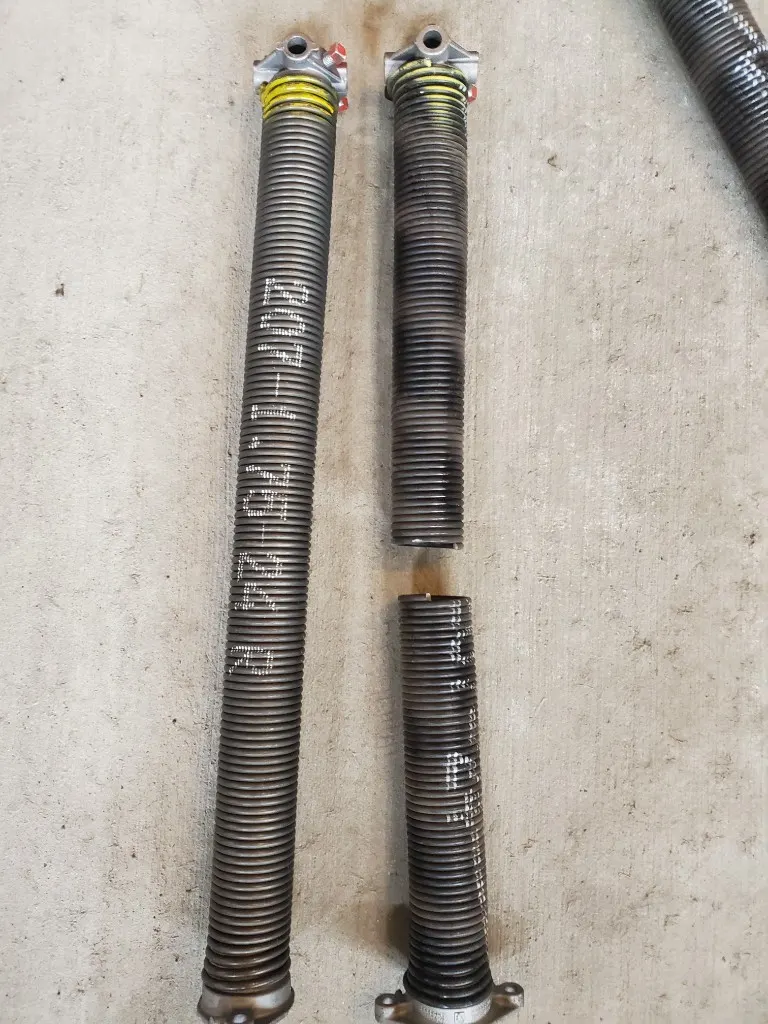
A horizontal metal shaft runs across the header. One or two thick coils sit on that shaft, often with a yellow or red mark on the winding cone. This is what most Kanata, Barrhaven, Stittsville, and newer Nepean doubles use.
Extension springs
Nothing thick sits above the opening. Instead, a long, thinner spring stretches along each horizontal track as the door goes up. Common on older singles in Westboro, Vanier, Sandy Hill, and some 1960s–80s bungalows in Bells Corners.
A third setup you may see on some Wayne Dalton doors is a TorqueMaster tube: a round shaft with no visible coils. Those springs hide inside the tube. We usually convert them to a standard torsion bar rather than rebuilding the old system.
How each type actually lifts the door
Torsion springs twist. As you close the door, the coils wind up on the shaft and store energy. Opening the door lets that energy unwind through drums and cables at each side, so the door feels almost weightless. One broken coil leaves a visible gap in the spring and dumps the full door weight onto the opener — which is why the opener often sounds like it is straining, or the door will not move at all.
Extension springs stretch. They hook between the rear track and the front, usually with a pulley and cable. As the door closes, the springs lengthen. When one snaps, the door often hangs crooked, a spring may dangle beside the track, and the remaining spring and cables take a beating.
Torsion vs extension at a glance
| Torsion | Extension | |
|---|---|---|
| Where they sit | On a shaft above the door | Along both horizontal tracks |
| Typical Ottawa homes | 1990s–today builder doubles, insulated steel doors | Older singles, alley / low-headroom garages |
| Lift quality | Even, quieter, easier on the opener | Less even; more cable and pulley wear |
| When one breaks | Loud bang; gap in the coil; door goes heavy | Spring hangs or flies; door often sits crooked |
| Safety | Contained on the shaft if handled correctly | Needs a safety cable through the coil; dangerous without one |
| Typical life here | About 7–12 years (shorter with Ottawa freeze-thaw) | Often shorter; rust and stretch show up sooner |
Which is better for an Ottawa home?
For almost every attached double in the suburbs, torsion is the right system. It lifts a heavier insulated door more evenly, which matters when the bottom seal is frozen to the slab in January. It is also quieter against bedrooms over or beside the garage.
Extension springs are not “wrong” — they are just older hardware. Vitaliy still sees them weekly on inner-city singles and some rural outbuildings. They can be replaced like-for-like. If the door is staying, though, converting to torsion is usually the better spend: safer failure mode, fewer cable issues, and a door the opener does not have to fight.
Ottawa freeze-thaw and extra winter cycles wear springs faster than a milder city. We stock 10,000-cycle springs on the truck and usually recommend replacing both so the door stays balanced. Typical installed range is $250–$350 per spring — see the 2026 pricing guide.
When converting extension to torsion makes sense
Conversion is worth quoting when:
- The extension springs have failed (or the safety cables are missing)
- You are keeping the door for several more years
- There is enough headroom above the opening for a torsion shaft
- The opener is already straining or the door never sat level
It is not automatic. Tight alley garages and some heritage openings do not have the space. In those cases we replace the extension pair correctly, add safety cables if they were missing, and tell you straight if a new door would be cheaper long term. TorqueMaster conversions follow the same logic: get the springs out of the sealed tube and onto a standard bar we can service next time.
What a broken spring looks and sounds like
- Torsion: a single loud bang, a gap in one coil, door too heavy to lift by hand, opener humming without moving the door
- Extension: a bang or twang from the side, a spring hanging beside the track, door crooked in the opening, extra slack in one cable
Do not force the opener. Do not try to “just get the car out” by yanking the door. If you need the bay open, wait for a technician — here is what to do in an emergency. Same-day spring replacement across Ottawa is usually 30–60 minutes on site once we are there.
FAQ
How do I know if I have torsion or extension springs?
Look above the opening. Coils on a metal bar = torsion. Long springs along the side tracks = extension. A round tube with no coils often means TorqueMaster.
Which is better, torsion or extension?
Torsion, for most homes: smoother lift, longer life, safer contained failure. Extension is older side-mounted hardware we still repair, and often convert.
Can you convert extension springs to torsion?
Yes, when there is enough headroom. We quote it on site. We also convert TorqueMaster systems to a standard torsion shaft.
Should I replace both springs?
Usually yes. They age as a pair. Replacing one leaves the door unbalanced and often means a second call a few weeks later.
Can I replace garage door springs myself?
No. The stored energy can cause serious injury. Call a trained technician. We carry common sizes for same-day work, 7 AM–6 PM Monday to Saturday.
Need springs replaced in Ottawa?
GDS replaces torsion and extension springs the same day across Ottawa and nearby suburbs, from 58 Larkspur Dr, Unit D, Nepean. Written quote before work starts, 3-year warranty on the repair, 5% off for seniors and veterans. Call or text 343-777-8893, book online, or request a quote. For the visit itself, read what to expect with spring replacement.