
How Long Do Garage Door Springs Last in Ottawa?
Garage door springs do not expire on a calendar. They wear out by cycles — one cycle is one open and one close. A standard residential torsion spring is commonly rated for 10,000 cycles. How long that lasts on your door depends on how often you use it, how heavy the door is, and how well the door is balanced.
This guide walks through the ratings, a simple way to estimate your own usage, when a high-cycle spring is worth asking about, and the wear signs that mean a replacement is due. For the repair itself, see garage door spring repair in Ottawa. If you are comparing spring types, start with torsion vs extension springs. If a spring already snapped on a cold morning, the winter breakage guide covers what to do next.
What a cycle rating actually means
The number in a spring catalog — 10,000, 15,000, 20,000, 25,000 — is a design life, not a warranty day-count. It assumes the spring is the correct size for the door, that the door is balanced, and that the spring is wound and maintained properly. A mismatched spring, or a door the opener is dragging because the springs are already weak, will not reach that number.
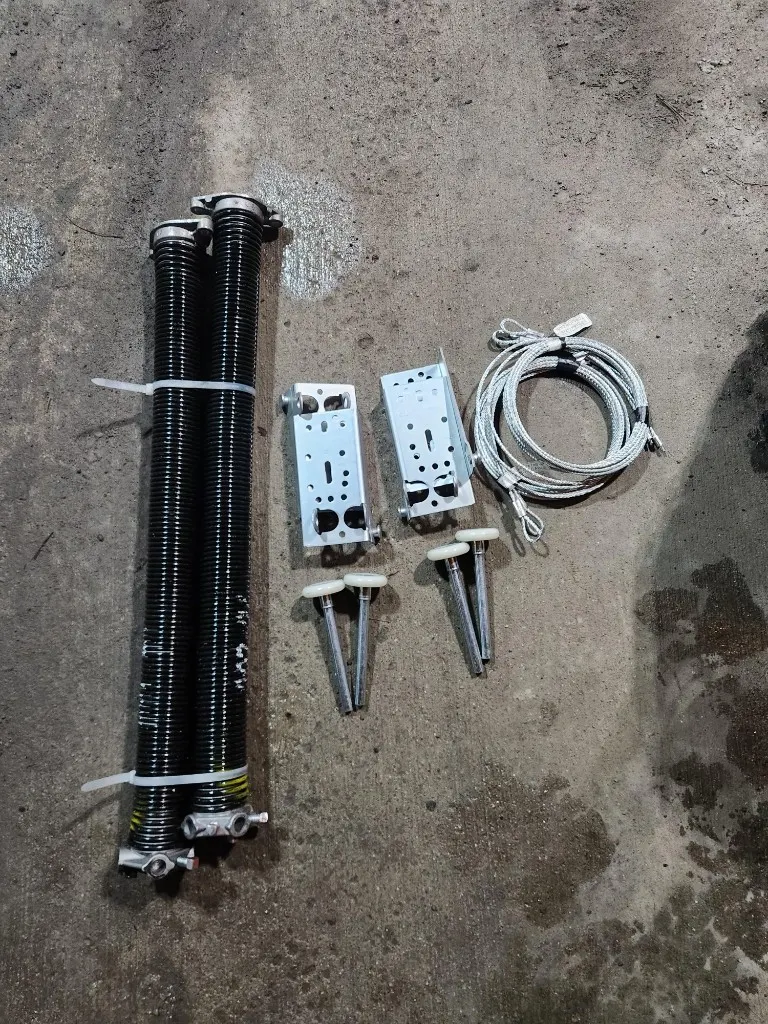
On a typical Ottawa replacement we install 10,000-cycle springs. That is the standard residential rating and the right repair for most singles and doubles used a few times a day. High-cycle springs, often rated at 20,000 or 25,000 cycles, tolerate more flex before they fatigue. They are an option we quote on site when the door or the household calls for it — not an automatic upgrade on every job.
A simple way to do the usage math
Count how many times the door opens on a normal weekday, then add weekends. Most commuter households are in the three-to-four-cycles-a-day range: out in the morning, back in the evening, plus a trip or two on the weekend. Some houses are much busier.
| Use per day (about) | Cycles per year (about) | 10,000-cycle spring, rough life |
|---|---|---|
| 2 cycles (out and back) | Around 700–800 | Often 12 years or more, if the door stays balanced |
| 3–4 cycles | Around 1,100–1,500 | Often about 7–10 years |
| 6–8 cycles (busy household) | Around 2,200–2,900 | Often about 3–5 years |
These are estimates, not a promise. A heavier insulated double uses the spring harder than a light single. An unheated garage in Stittsville or Carp, or a door that sits slightly out of balance, will wear a spring faster than the table suggests. If you already know the door is more than seven or eight years past its last spring job, and you use it every weekday, it is reasonable to plan on a replacement rather than wait for the bang.
What shortens a spring’s life
- A heavy door. Insulated steel doubles and older wooden doors ask more of each coil. An undersized spring works too hard from day one.
- Poor balance. If the door drops or creeps up when the springs should be holding it, the opener and the springs fight each other. Do not run that test yourself if you already suspect a broken spring.
- Replacing only one spring. The remaining spring is the same age. It often fails a short time later, and the door is uneven in the meantime.
- No maintenance. Dry hinges, dirty tracks, and a spring shaft that has never been lubricated add friction, so the spring lifts more than the door’s actual weight.
- Ottawa weather. Cold does not use up cycles on its own, but it is when tired springs fail. Salt and moisture are harder on cables and bottom brackets, which then shock the springs if a cable lets go.
Extension springs, still found on some older singles, usually have a shorter, harder life than a torsion pair and are tougher on the cables. If you have them, the conversion question is covered in the torsion vs extension guide.
When high-cycle springs make sense
A high-cycle spring is worth asking about when the door will see more work than a typical commuter house, or when the door itself is heavy. That includes a busy household in Riverside South or Manotick, a heavy insulated double, or a garage used through the day, not just twice. They are not the default on every truck visit, because a correctly sized 10,000-cycle pair is the right repair for most Ottawa doors and is what we carry as standard. If high-cycle is the better fit, we quote it before we start. There is no point putting a long-life spring on a door that is still out of balance or binding in the tracks.
Maintenance that actually helps
You cannot add cycles back to a tired spring. You can keep a healthy spring from doing extra work. Lubricate the spring shaft and the coils a couple of times a year, including before winter, with a garage-door lubricant — not WD-40. Lubricate hinge points and roller stems, but do not grease the tracks. Listen for a door that has become heavy, or an opener that sounds like it is straining: that is a spring or balance problem, not something to fix by turning up the opener force.
A yearly tune-up is when we check balance, look for rust or uneven coils, and catch a cable or roller before it takes the spring with it. Do not paint the springs, and do not tighten or loosen them yourself. Winding a torsion spring is a technician job. The safety reasons are the same ones in the spring replacement guide.
Signs of wear, from the floor
Look at the spring or springs above the door (or along the tracks, if you have extension springs) with the door down. Rust, pitting, or a coil that looks stretched or uneven compared with its neighbour is wear. A gap in the coil means that spring is already broken. The door may feel heavy, sag, or will not stay up. The opener may hum, start, then stop, or the door may reverse partway up.
Rule out the springs before you assume the opener is the problem. A visit for spring repair in Bells Corners, or anywhere else we serve, always includes a balance check so we do not sell an opener repair the springs caused. When a spring is due, replace both (or the full extension set) in one visit. Same-day spring repair is the usual call, and a photo of the shaft is enough for a range over the phone.
FAQ
How long do garage door springs last?
A standard 10,000-cycle spring on a door used about three or four times a day often lasts around seven to ten years. A busier house, a heavier door, or a spring that was already tired will come up shorter. Cycle rating and how you use the door matter more than the calendar.
What does a 10,000-cycle spring mean?
One cycle is one open and one close. A 10,000-cycle spring is built for that many cycles under normal use, not for 10,000 days. We install 10,000-cycle springs as the standard replacement. Higher-cycle springs are quoted when the door is heavy or the household uses it a lot.
Should I buy high-cycle springs?
They are worth asking about if the door is a heavy insulated double, or if it opens many times a day. They cost more and are quoted on site. For a typical single used twice a day, a standard 10,000-cycle pair is usually the right repair.
How much does spring replacement cost in Ottawa?
Typically $250–$350 per spring, parts and labour, with a 3-year warranty. Most Ottawa doors use two springs, and both should be replaced together. You get a written quote before work starts.
What are the signs my springs are wearing out?
The door feels heavy, the opener sounds like it is straining, the coils look rusty or uneven, or the door will not stay up on its own. A visible gap in the coil means it has already broken. Stop using the opener and call.
Springs feeling heavy? Get them checked.
GDS sizes and replaces garage door springs the same day across Ottawa, from 58 Larkspur Dr, Unit D, Nepean. Call or text 343-777-8893, book online, or request a quote. If you want the visit laid out step by step, see what spring replacement looks like.